


Manufacturers in lami tube manufacturing face several challenges as they pursue sustainability. The industry sees stricter regulations, rising raw material costs, and recycling obstacles. Environmental concerns and consumer demand for eco-friendly packaging drive innovation. Companies must balance reducing plastic use with maintaining product protection.
| Challenge Type | Description |
|---|---|
| Regulatory Complexity | Manufacturers face compliance challenges due to diverging packaging regulations across markets, particularly for food-contact applications, which can delay product launches. |
| Rising Raw Material Costs | The increasing costs of raw materials impact the ability to reduce plastic use while maintaining product protection, as manufacturers must balance cost with sustainability efforts. |
| Recycling Challenges | The underdeveloped recycling infrastructure for multilayer tubes leads to environmental concerns, as many tubes end up in landfills due to difficulties in separating materials during recycling. This complicates sustainability efforts. |
Key Takeaways
- Manufacturers can reduce plastic use by adopting lightweighting techniques, which lower shipping costs and improve sustainability.
- Choosing the right materials, like bio-based and recycled options, helps maintain product protection while supporting eco-friendly packaging.
- Reducing the thickness of laminate tubes minimizes plastic consumption without compromising barrier properties, aligning with sustainability goals.
- Process optimization through automation and smart technology enhances efficiency, reduces waste, and ensures consistent quality in laminate tube production.
- Innovative materials, such as paper-based laminates, offer sustainable alternatives for packaging, especially for dry goods and short-term products.
Product Protection in Laminate Tubes
Barrier Properties
Laminate tubes play a vital role in skincare packaging and other industries by providing strong barrier protection. These tubes shield products from moisture, oxygen, and light, which helps maintain quality and extend shelf life. The choice of materials in lami tube manufacturing affects the barrier properties and overall sustainability of the packaging.
The following table highlights how different types of laminate tubes offer unique barrier benefits:
| Type of Laminated Tube | Barrier Properties Description |
|---|---|
| Aluminum Barrier Laminates (ABL) | Excellent protection against light, air, and moisture due to the aluminum layer. |
| Plastic Barrier Laminates (PBL) | Good barrier properties with flexibility in design and transparency, made entirely of plastic. |
| Ethylene Vinyl Alcohol (EVOH) | Provides protection against oxygen and gases, often combined with other plastics for enhanced properties. |
Laminate tubes, especially those with aluminum barriers, outperform traditional plastic tubes in preserving product integrity. These tubes reduce environmental impact by keeping products fresh longer, which minimizes waste. The improved barrier properties also support sustainability goals by lowering the need for preservatives and reducing the frequency of product spoilage.
Tip: Choosing the right laminate for tubes can help brands meet both environmental and product protection standards.
Durability Standards
Durability remains essential for laminate tubes in packaging. Manufacturers must ensure that tubes withstand handling, transportation, and storage without leaks or bursts. However, many manufacturers do not use standardized testing methods for durability. Quality control personnel often squeeze tubes at the end of the production line to check for leaks, but this method does not provide measurable data.
To improve durability standards, the industry should adopt destructive testing methods. These tests measure burst pressure and leak detection, offering quantifiable results. Reliable durability testing ensures that laminate tubes protect products and reduce environmental impact by preventing spills and contamination. Strong durability also supports sustainability by allowing thinner materials without sacrificing protection, which helps lower the overall use of plastics in lami tube manufacturing.
Lightweighting in Lami Tube Manufacturing
Lightweighting has become a leading strategy in lami tube manufacturing for reducing plastic use without sacrificing product protection. By focusing on advanced materials and precise engineering, manufacturers can lower the environmental impact of laminate tubes while maintaining the integrity of skincare packaging and other sensitive products.
Weight-Saving Laminates
Manufacturers select specific materials for laminate tubes to achieve both weight reduction and strong barrier properties. The right combination of materials ensures that tubes remain lightweight yet durable, protecting the product inside from moisture, oxygen, and light. The table below highlights common materials used for weight-saving laminates and their effectiveness:
| Material Type | Barrier Properties | Weight-Saving Capability |
|---|---|---|
| Aluminium Foil | Excellent barrier to moisture, gases, light | High |
| Ethylene/Vinyl-Alcohol | Good barrier to gases | Moderate |
| Polyvinyl Alcohol | Effective barrier coating | Moderate |
| Polyvinylidene Chloride | Strong barrier to moisture and gases | Moderate |
| Silicon Oxides | Improved barrier to oxygen, CO₂, moisture | High |
Aluminium foil and silicon oxides stand out for their high weight-saving capability and excellent barrier performance. These materials allow laminate tubes to use less plastic while still providing the necessary protection for products like skincare packaging. The use of such advanced materials also supports sustainability goals by reducing the overall amount of plastic in the environment.
Note: Choosing the right laminate materials can help brands create environmentally friendly and biodegradable packaging solutions without compromising product integrity.
Reducing Tube Thickness
Reducing the thickness of laminate tubes offers a direct way to decrease plastic consumption. This approach aligns with sustainability initiatives and helps lower the environmental impact of packaging. Manufacturers have adopted new technologies that allow for thinner tube walls while still maintaining the barrier and durability needed for product protection.
- Reducing tube thickness minimizes material usage while preserving barrier properties.
- This change aligns with sustainable packaging initiatives aimed at reducing environmental impact.
- Advances in technology have allowed for thinner tube walls without compromising product protection.
The lami tube making machine plays a crucial role in this process. Modern machines feature high-precision control systems that enable accurate adjustments to tube thickness during production. These machines also use intelligent control systems and multi-layer structure designs to optimize material usage and maintain consistent quality. The table below outlines key technological advancements in lami tube making machines:
| Feature | Description |
|---|---|
| High-Precision Control System | Enables accurate adjustments to tube thickness during production. |
| Intelligent Control System | Uses advanced algorithms for optimizing material usage. |
| Multi-Layer Structure Design | Facilitates the creation of tubes with varying thicknesses. |
| Fully Automation and High-Efficiency | Reduces human error and increases production speed. |
| Energy-Efficiency Optimization System | Minimizes waste and lowers operational costs. |
| Modular Design in Production Line | Allows for flexibility in manufacturing processes. |
These advancements ensure that laminate tubes meet strict durability and barrier standards, even as manufacturers reduce material use. The result is a more sustainable product that protects both the environment and the contents inside the tube.
Cost considerations also influence the adoption of lightweighting and innovative materials. Lightweight materials can reduce shipping costs and improve logistics efficiency. However, advanced manufacturing technologies may require a higher initial investment. Market competition from alternative packaging solutions can also impact pricing strategies. Manufacturers must balance these factors to achieve both economic and environmental benefits.
Tip: Lightweight laminate tubes not only reduce plastic use but also enhance brand appeal through improved aesthetics and eco-friendly messaging.
Lightweighting in laminate tubes demonstrates that manufacturers can achieve significant reductions in plastic use—often over 10%—while maintaining the protection and integrity required for sensitive products. This approach supports sustainability and helps brands meet growing consumer demand for environmentally responsible packaging.
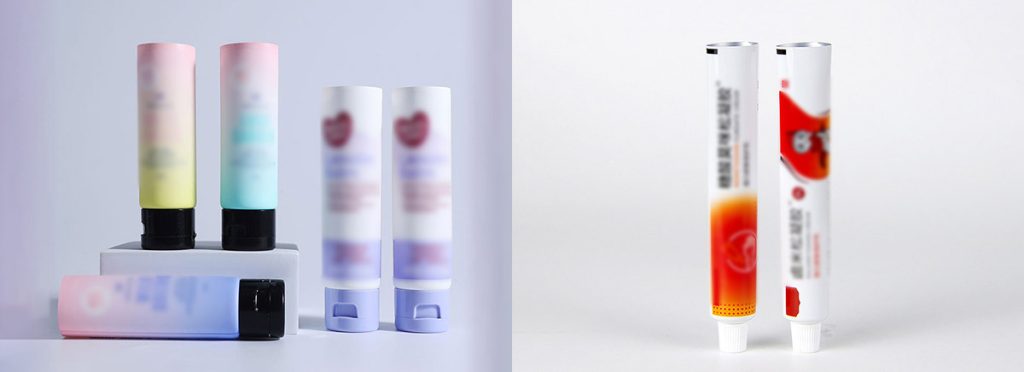
Innovative Materials for Sustainability
Innovative materials have transformed lami tube manufacturing, offering sustainable options that reduce plastic use and maintain product protection. Manufacturers now explore bio-based, recycled, and paper-based alternatives to traditional plastic tubes. These new materials help brands meet sustainability goals and respond to consumer demand for eco-friendly packaging.
Bio-Based and Recycled Options
Bio-based and recycled materials have become popular choices for laminate tubes. They offer strong barrier properties and durability, making them suitable for skincare packaging and other sensitive products. Manufacturers use sustainable resources like sugarcane and corn to produce bioplastic tubes. These tubes can biodegrade at the end of their life cycle, lowering their impact on the environment.
The table below highlights promising bio-based and recycled materials used in lami tube manufacturing:
| Material Type | Description |
|---|---|
| Recycled Materials | Use of post-consumer recycled materials (PCR) and post-industrial recycled materials (PIR) for improved quality. |
| BioPE | New PE resins made from waste and residue oils, comparable to traditional resins, with food compliance. |
| Weight Saving Laminates | Laminates designed to reduce plastic use by up to 10% while maintaining the same thickness. |
Manufacturers also use bioplastic tubes made from renewable resources. These tubes replace fossil-based plastic tubes in many sectors. They offer recyclable and biodegradable packaging solutions, which help protect the environment.
- Bioplastic tubes come from renewable resources like sugarcane and corn.
- They biodegrade after use, reducing environmental impact.
- They increasingly replace traditional plastic tubes in various industries.
Recycled materials in laminated tubes provide excellent barrier protection against oxygen, moisture, and light. They remain flexible and durable, although recycling can be complex due to multi-layer construction. Virgin plastics allow slightly more air and UV permeation but are easier to recycle as single materials.
| Feature | Recycled Materials in Laminated Tubes | Virgin Plastics |
|---|---|---|
| Barrier Protection | Excellent barrier against oxygen, moisture, and light | Allows slightly more air and UV permeation |
| Durability | Flexible and durable, but complex to recycle | Durable and versatile |
| Recycling Complexity | Multi-layer construction complicates recycling | Easier to recycle as single material |
Note: Bio-based and recycled materials in laminate tubes support sustainability while maintaining high standards for protection and durability.
Paper-Based Laminates
Paper-based laminates offer another sustainable option for packaging. These tubes use paper as the main material, reducing plastic content and supporting biodegradable packaging initiatives. Paper-based tubes work well for dry goods and short-term products. They require additional processing to match the barrier performance of plastic laminates.
- Plastic laminates provide superior protection against moisture and oxygen, which is crucial for maintaining food quality.
- Paper laminates are effective for dry goods and short-term products.
- Manufacturers add coatings or layers to paper-based tubes to improve barrier properties and extend shelf life.
Laminated tube designs using paper-based materials help brands create recyclable and biodegradable packaging. These tubes support sustainability and reduce the impact on the environment. Manufacturers continue to improve paper-based laminates to meet the durability and barrier standards required for sensitive products.
Tip: Paper-based laminate tubes offer a balance between sustainability and product protection, making them ideal for brands seeking eco-friendly packaging solutions.
Innovative materials such as bio-based, recycled, and paper-based options allow manufacturers to produce laminate tubes that meet both sustainability and protection requirements. These materials help reduce plastic use, support biodegradable packaging, and maintain the barrier and durability standards needed for skincare packaging and other applications.
Process Optimization and Quality Control
Efficient Manufacturing
Manufacturers in lami tube manufacturing use process optimization to improve efficiency and support sustainability. Automation plays a key role in reducing waste and maximizing output. Automated systems provide real-time insights into inventory status, which helps companies avoid surplus materials or products. Demand forecasting tools predict sales levels, allowing production to match demand and minimize excess inventory. Just-in-time production methods create tubes only when needed, reducing unnecessary stock.
Smart sensors control machinery to limit energy consumption, which benefits the environment. Automated machinery operates with fewer variables, ensuring consistent quality and maximum output. These strategies help manufacturers use fewer materials while maintaining superior barrier protection and durability in laminate tubes.
- Automation reduces waste by monitoring inventory and production.
- Demand forecasting matches production to actual sales.
- Just-in-time methods minimize excess inventory.
- Smart sensors and automated machinery lower energy use and environmental impact.
Process optimization allows manufacturers to produce tubes with less plastic, while still preserving product integrity and protection. These improvements support sustainability goals and help brands deliver reliable packaging solutions.
Ensuring Standards
Quality control remains essential when manufacturers introduce new materials in laminate tubes. They use advanced monitoring systems to maintain consistent quality and preserve product integrity. IoT sensors provide continuous monitoring of material performance and environmental conditions. Predictive models aggregate data from sensors, which helps forecast material performance and supports informed decision-making. Environmental sensors track external conditions that affect material properties, enabling timely interventions to prevent degradation.
| Evidence Type | Description |
|---|---|
| IoT Sensors | Continuous monitoring of material performance and environmental conditions |
| Predictive Models | Data aggregation for forecasting material performance |
| Environmental Sensors | Monitoring external conditions to prevent degradation |
| Proactive Measures | Real-time data enables actions like adjusting ventilation or applying coatings |
Manufacturers face several challenges during quality control. Defect detection and analysis can be difficult, especially for tubes with complex geometries. Subtle defects may escape visual inspection. Process stability and deviations occur due to fluctuations in raw materials or batch differences. Environmental influences such as temperature, humidity, and dust levels affect material flow, cooling, and curing, which can lead to defective parts. Quality assurance inspections take place before and after processing to assess raw material and final part quality. Insufficient control can result in quality issues.
| Challenge | Description |
|---|---|
| Defect Detection & Analysis | Visual inspections may miss subtle defects in complex tubes |
| Process Stability & Deviations | Fluctuations in raw materials or batches impact quality |
| Environmental Influences | Temperature, humidity, and dust affect material flow and curing |
| Quality Assurance Inspections | Inspections before and after processing assess raw material and final part quality |
Manufacturers use these quality control measures to ensure laminate tubes meet durability and barrier standards. These efforts help preserve product integrity and maintain protection, even as companies reduce plastic use. Consistent quality supports sustainability and strengthens consumer trust in packaging.

Conclusion
Manufacturers can reduce plastic in laminate tubes by adopting lightweighting, using recycled and bio-based materials, and optimizing processes. These steps lower greenhouse gas emissions, decrease waste, and enhance energy efficiency. The table below highlights recent innovations that support a sustainability approach while maintaining protection for products:
| Aspect | Description |
|---|---|
| Eco-friendly Materials | Lighter, recycled, and bio-based materials for laminate tubes |
| Process Optimization | Fine-tuned production for less waste and strong tube protection |
| Environmental Impact | Reduced emissions and landfill waste, supporting sustainability |
Recycled and recyclable tubes appeal to the environmentally-conscious consumer and help brands deliver friendly packaging solutions.
FAQ
What Are the Main Benefits of Lightweighting in Laminate Tubes?
Lightweighting reduces plastic use and lowers shipping costs. Manufacturers maintain product protection by using advanced materials. This approach helps brands meet sustainability goals and improves the environmental profile of tubes.
How Do Bio-Based Materials Affect the Performance of Tubes?
Bio-based materials offer strong barrier properties and durability. They come from renewable resources and biodegrade after use. These materials allow laminate tubes to protect products while supporting eco-friendly packaging initiatives.
Can Paper-Based Laminates Replace Plastic Tubes for All Products?
Paper-based laminates work well for dry goods and short-term products. Manufacturers add coatings to improve barrier properties. For products needing high moisture protection, plastic tubes remain the preferred choice.
What Role Does Process Optimization Play in Laminate Tube Manufacturing?
Process optimization increases efficiency and reduces waste. Automated systems monitor production and energy use. Manufacturers produce tubes with less plastic while maintaining quality and protection standards.
How Do Manufacturers Ensure the Quality of Laminate Tubes with New Materials?
Manufacturers use IoT sensors and predictive models to monitor material performance. Quality assurance inspections check raw materials and finished tubes. These steps help maintain durability and barrier standards in laminate tubes.