



Setting up a laminated tube making machine can seem complex, but the right approach makes it achievable. New machines for 2025 offer advanced automation, including robotics, PLCs, and touch screen controls. These features increase accuracy and speed.
- Automation reduces human error, lowers contamination risk, and ensures consistent quality.
- Industry 4.0 technologies, such as IoT and real-time monitoring, transform production lines into smart and efficient systems.
A laminated tube making machine now supports energy-efficient operations and flexible production. Manufacturers can meet diverse market needs with ease.
Key Takeaways
- Laminated tube making machine uses automation and smart technology to improve speed, accuracy, and product quality.
- Careful planning of space, utilities, and safety ensures smooth machine installation and efficient production.
- Following precise setup steps, including calibration and testing, helps produce strong, leak-proof tubes consistently.
- Regular maintenance, quality checks, and staff training keep the machine running well and maintain high product standards.
- Using advanced features like PLC controls and vision systems reduces errors, lowers costs, and supports future growth.
Setup Steps Overview
Process Flow
A laminated tube making machine follows a precise tube making process to ensure quality and efficiency. The main stages include:
- Resin Mixing: Operators blend plastic resins to achieve the desired material properties and uniformity.
- Tube Extrusion: The machine melts and shapes resin into tubes with specific size and thickness.
- Tube Heading: Injection molding forms the tube head, which provides sealing and functional features.
- Offset Printing: High-quality graphics and branding appear on the tube surface.
- Hot Stamping: Decorative or branding elements are added for visual appeal.
- Labeling: Labels are applied to tubes for identification and compliance.
- Nozzle Drilling: The tube opening is prepared for product dispensing.
- Foil Sealing: The tube is sealed to protect its contents.
- Injection Cap Molding: Caps are produced through injection molding for secure closure.
- Capping: Caps are applied to tubes to secure and protect the product.
- Final Inspection: Tubes are checked for quality, defects, and compliance.
- Packaging: Finished tubes are prepared for shipment and distribution.
Each stage plays a vital role in producing laminated tubes that meet industry standards for appearance, durability, and safety.
Key Considerations
Before starting the setup, manufacturers should evaluate several important factors:
- Machine capability must support multilayer laminated tubes with barrier layers for product protection.
- Supplier experience with laminated tube technology ensures reliable material sourcing.
- Adaptability to different laminate films maintains production flexibility.
- Higher per-unit costs may be justified by improved product protection and market competitiveness.
- Output capacity should match production volume requirements.
- Compatibility with local resin types and tube size ranges is essential.
- Production tolerances must ensure dimensional accuracy, especially for sensitive sectors like pharmaceuticals or cosmetics.
- Automation level (manual, semi-automatic, fully automatic) affects labor and maintenance needs.
- Utility requirements such as power, compressed air, and cooling must be confirmed.
- Quality certifications like ISO 9001 and CE support manufacturing and safety standards.
- After-sales support, including technical assistance, training, spare parts, and warranty, is crucial.
- Material selection for machine parts, such as stainless steel, impacts hygiene and durability.
- Regulatory compliance (FDA, EU standards) must be verified for the intended application.
Manufacturers often face challenges such as dust accumulation, tube size variability, and sealing difficulties. Solutions include using ionized air blasts, calibrated tube holders, and heated serrated jaws for sealing. Photoeyes or cameras help align graphics with seals, and ultrasonic welding offers an alternative sealing method.
Planning & Site Prep
Space & Location
Selecting the right space for a laminated tube making machine determines the efficiency and safety of the entire operation. The area must be clean, dry, and level to support stable machine placement. Good ventilation helps control temperature and prevents dust accumulation, which can affect the barrier layer during tube production. Operators should ensure enough room for machine access, maintenance, and workflow movement. A well-organized space allows technicians to monitor the printed web stock and adjust machine settings quickly. Positioning the machine near utility sources, such as electrical outlets and compressed air lines, reduces installation time and supports smooth operation. Safety zones around the machine protect workers and equipment from accidental contact or movement.
Tip: Use a simple floor plan to visualize machine placement, workflow paths, and emergency exits. This step helps prevent bottlenecks and supports future expansion.
Site Checklist
A thorough site checklist streamlines installation and reduces errors. The checklist covers several critical steps:
- Clean and prepare the site, ensuring it is level, dry, and well-ventilated.
- Confirm utility availability and compatibility, including electrical power and pneumatic connections.
- Assemble a skilled installation team with experience in packaging machinery.
- Gather essential tools, such as wrenches, screwdrivers, voltage testers, and lifting equipment.
- Inspect equipment upon arrival for missing or damaged parts before unpacking.
- Unpack components carefully, using lifting assistance and following safety protocols.
- Schedule safety training for all personnel involved in installation and operation.
- Position machine units according to the planned workflow and production line layout.
- Set packaging parameters on the machine’s HMI, including sealing temperature and container dimensions.
- Inspect connections, lubrication points, safety covers, and emergency stops before powering on.
- Conduct trial runs, starting with empty cycles, then loading film to check sealing and alignment.
- Adjust film tension and align sensors for accurate detection and cutting.
- Calibrate seal position and temperature based on film material to ensure a secure barrier layer.
- Check electrical wiring, voltage, grounding, and insulation.
- Enforce PPE requirements for all personnel during installation.
- Monitor for common issues, such as equipment shaking, power problems, film misalignment, and sealing errors, and apply solutions as needed.
| Step | Purpose | Notes |
|---|---|---|
| Clean site | Prevent contamination | Focus on dust control |
| Utility check | Ensure machine compatibility | Match specs to requirements |
| Safety training | Protect personnel | Use PPE and clear protocols |
A well-prepared site supports efficient setup and reliable production, especially when handling tubes with a barrier layer for sensitive products.
Machine Installation
Sequence
Technicians begin the installation process by reviewing the manufacturer’s manual for the laminated tube making machine. They check all components and verify that each part matches the packing list. The team places the main frame in the designated area, ensuring stability and alignment with the workflow. Next, they assemble auxiliary units, such as feeders and conveyors, connecting them to the main frame. Electricians wire the control panel and connect the machine to the power supply. Pneumatic lines are attached to support air-driven functions. Operators install the feeding system and calibrate the unwinding mechanism for smooth material flow.
Tip: Use a checklist to track each installation step. This practice helps prevent missed connections and reduces setup errors.
After assembly, technicians test the movement of forming rolls and sealing jaws. They adjust the forming rolls to match tube diameter specifications. The team sets the sealing temperature and cutting length according to the laminate material. They run a dry cycle to confirm that all moving parts operate smoothly. The final step involves integrating the production machine with automation controls, such as PLCs and sensors, to ensure efficient operation.
Safety
Safety remains a top priority during installation. Workers wear personal protective equipment, including gloves, safety glasses, and steel-toed shoes. The team checks that all emergency stops and safety covers function correctly. They inspect electrical wiring for proper insulation and grounding. Technicians verify that pneumatic connections do not leak and that pressure regulators work as intended.
| Safety Measure | Purpose | Action Required |
|---|---|---|
| PPE | Protect workers | Use gloves, glasses, shoes |
| Emergency stops | Prevent accidents | Test before operation |
| Wiring inspection | Avoid electrical hazards | Check insulation, grounding |
| Pneumatic checks | Prevent air leaks | Inspect connections |
Note: Regular safety audits help maintain a secure environment and reduce the risk of injury during machine operation.
Utility Setup
Power & Air
Laminated tube making machine relies on stable power and compressed air to operate efficiently. Most models require an industrial voltage of 380V, which matches standard factory supplies. Some machines also accept 220VAC/50Hz, offering flexibility for different regions. The power rating ranges from 2.5KW to 12KW, depending on the machine’s size and automation level. Operators must confirm that the facility’s electrical system can handle these demands.
Compressed air supports pneumatic drives and high-speed automation. Machine typically needs an air supply pressure of around 0.6 Mpa. Air consumption falls between 0.35 and 0.6 cubic meters per minute. This steady airflow ensures smooth feeding, forming, and sealing. The following table summarizes the typical requirements:
| Parameter | Typical Values |
|---|---|
| Power Supply | 220VAC/50Hz or 380VAC/50Hz |
| Power | 2.5KW to 12KW |
| Air Supply | Around 0.6 Mpa |
| Air Consumption | 0.35 to 0.6 m³/min |
Tip: Technicians should install air filters and dryers to prevent moisture and dust from entering pneumatic lines. Clean air extends machine life and improves tube quality.
Water Supply
Water plays a key role in cooling and maintaining temperature stability during tube production. Machines often use water-cooled systems to regulate heat from motors and sealing units. A reliable water supply prevents overheating and reduces downtime. Operators should check for leaks and ensure that hoses and fittings remain secure.
Facilities must provide clean water at a consistent pressure. Water quality affects cooling efficiency and machine longevity. Some manufacturers recommend installing filtration units to remove impurities. Regular inspection of the cooling system helps maintain optimal performance.
Note: Monitoring water temperature and flow rate allows technicians to detect problems early. Quick action prevents damage and supports continuous production.
Laminated Tube Manufacturing Process
Feeding & Unwinding
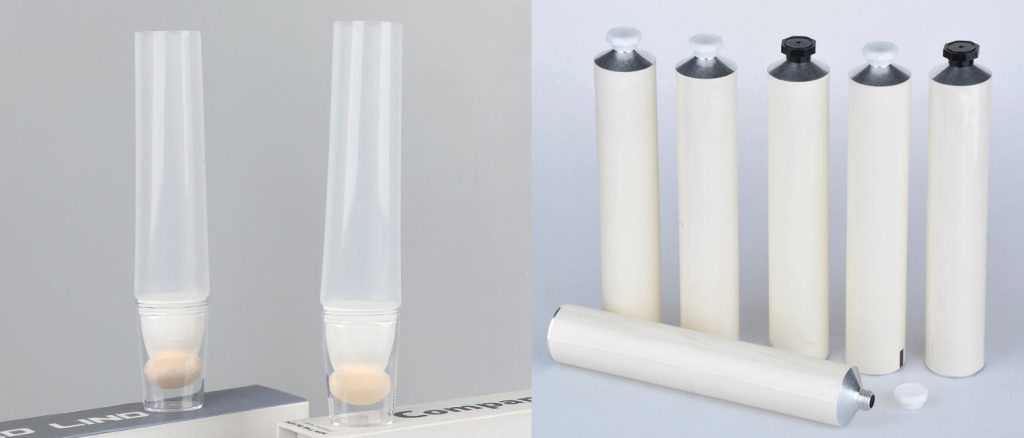
The laminated tube manufacturing process begins with careful feeding and unwinding of raw materials. Operators select materials such as plastic films, aluminum, and barrier films to create the tube’s multi-layer structure. They must ensure the correct unwinding direction to match equipment requirements and prevent jams. Maintaining print orientation accuracy is essential for label alignment and regulatory compliance.
Operators control web tension using surface drives or winding torque. This approach achieves the desired roll hardness and prevents defects. For high-slip films, they wind tightly at the core with high torque and taper tension. This method prevents inner web slippage and defects like telescoping. For low-slip films, gap winding with minimal gap and spreading near the winding point helps avoid blocking and wrinkling.
Tip: Operators should follow standard operating procedures and conduct sample trials before full production. This practice reduces waste and ensures smooth operation.
Proper adhesive side alignment prevents adhesion failures. Regular training and clear communication with suppliers help maintain high-quality unwinding. These best practices improve productivity, reduce waste, and support consistent laminate tubes production.
Tube Forming
Tube forming transforms the laminated web into a cylindrical shape. The process starts with tube body formation, where the laminated material passes through forming rolls. Operators adjust the gap between the upper and lower rolls to control plastic strain and work hardening. Increasing the gap from 5.0 mm to 5.6 mm can reduce cracks and uneven strain distribution.
Selecting the combined bending method improves edge elongation control and overall forming quality. Fine-tuning roll positions and gaps based on servo feedback helps maintain consistent torque across passes. This adjustment reduces defects and extends equipment life. Optimizing roll flower design and deformation zone length prevents edge wrinkling and bulging by managing edge elongation within elastic limits.
Production speed has a minor effect on plastic strain, so operators can optimize speed without sacrificing quality. Numerical simulations and practical tests confirm that these adjustments improve forming quality and consistency.
Actionable Tip: Operators should regularly check and adjust forming rolls based on material thickness and tube diameter. This step ensures uniform tube formation and reduces the risk of defects.
Sealing & Cutting
After tube formation, the machine seals and cuts the tubes to the required length. The sealing process uses heat or ultrasonic energy to bond the tube edges, creating a strong barrier layer that protects the product inside. Operators set the sealing temperature according to the laminate material. Too high a temperature can damage the barrier layer, while too low a temperature may cause weak seals.
Cutting follows sealing. Operators adjust the cutting length on the machine’s control panel, often using a PLC interface. Accurate cutting ensures that each tube meets size specifications and fits with downstream processes. Automation allows for precise, repeatable adjustments, reducing manual intervention and minimizing waste.
| Step | Key Setting | Impact on Quality |
|---|---|---|
| Sealing | Temperature, pressure | Ensures strong barrier |
| Cutting | Length, speed | Maintains tube uniformity |
Note: Operators should monitor seal position and temperature during production. Regular calibration prevents leaks and maintains product integrity.
Header & Cap Fitting
The final steps in the laminated tube manufacturing process involve header and cap fitting. The machine forms the reinforced shoulder area near the tube cap, often using injection molding. This step ensures a secure fit and adds strength to the tube’s opening.
Cap attachment follows header formation. Automated systems position and secure the cap, creating an airtight seal. PLC control and automation play a vital role here. Machines equipped with PLCs and touchscreen interfaces enable precise tube feeding, filling, sealing, and capping. These systems achieve high filling accuracy and use advanced sealing technologies to ensure airtight seals.
Automation reduces manual labor, increases throughput, and maintains consistent product quality. Integrated safety features, such as overload protection and interlock shutdowns, protect both operators and equipment. Automated output and coding systems convey finished tubes and apply traceability codes, supporting compliance and efficient distribution.
Tip: Regularly inspect header and cap fitting stations for alignment and secure attachment. This practice ensures that laminate tubes meet industry standards for safety and durability.
The laminated tube manufacturing process—from material selection, extrusion of plastic layers, and lamination, to curing and lamination, tube formation, sealing, and final assembly—relies on precise control and automation. These steps guarantee that each tube features a robust barrier layer and meets the demands of modern packaging.
Workflow & Layout
Production Flow
A well-designed production flow increases efficiency and reduces waste in laminated tube manufacturing. Facilities often use modular, compact machinery that allows quick changeovers. This approach minimizes downtime and simplifies maintenance. Employees monitor inventory with technologies like RFID, which helps track materials and finished products. Handling multiple short production runs becomes easier when the system supports legible traceability codes, such as QR codes. These codes help maintain quality and compliance.
Manufacturers encourage continuous improvement by using Lean and Kaizen methodologies. Employees suggest small changes that reduce waste and optimize processes. Regular meetings and suggestion boxes foster open communication. Cross-functional teams act on feedback, driving long-term productivity gains. Leading facilities separate lamination and printing zones from raw material intake. This layout prevents cross-contamination and protects sensitive processes. Automation of sequential steps, including extrusion, weaving, lamination, slitting, and inspection, ensures consistent product quality and minimizes downtime.
Tip: A clean, organized environment with proper airflow and fire protection safeguards both workers and products.
Layout Tips
Effective layout planning reduces downtime and improves material handling. Operators use digital position indicators to monitor changeovers, which lowers errors and setup times. Storing machine settings as recipes in the control system allows quick format adjustments and consistent product quality. Compact, universal position indicators at multiple machine points help maintain quality and reduce the need for downstream inspection.
Intuitive machine controls compensate for skilled labor shortages. Operators can set up processes safely without deep technical knowledge. Machines with long heating and cooling sections and high-speed operation support reliable material handling. When planning the layout, facilities consider space, installation needs, operator safety, and customization options. These factors optimize workflow and reduce downtime.
| Layout Feature | Benefit |
|---|---|
| Digital position indicators | Faster, error-free changeovers |
| Recipe-based settings | Reliable, consistent quality |
| Intuitive controls | Easier operation, less training |
| Compact equipment | Saves space, improves flow |
Note: Careful layout planning supports efficient movement of materials and people throughout the manufacturing line.
Testing & Calibration
Initial Testing
Technicians begin initial testing after installing a laminated tube making machine. They use several procedures to confirm that the equipment produces strong and reliable tubes. The following steps help verify seal integrity and tube strength:
- Burst Threshold Test
Operators set a pressure value on the machine interface. They increase the pressure inside a tube until it bursts. The machine records the burst pressure and compares it to the set value. Visual indicators show if the tube passes or fails. - Hold Test
Operators set a threshold pressure and raise the tube pressure to this level. They hold the pressure for five seconds. This test detects leaks or pressure changes. - Hold Test to Burst Test
Operators combine the previous tests. They pressurize the tube to a set value and hold it for five seconds. Then, they increase the pressure until the tube bursts. The machine records all data.
Laboratory-grade instruments, such as the AnC Precision PTS-100, measure exact pressure thresholds and detect leaks. These tests confirm that the machine seals tubes correctly and meets safety standards.
Tip: Technicians should perform these tests on several sample tubes before starting full production.
Calibration
Calibration ensures that the laminated tube making machine operates within precise limits. Technicians adjust machine settings to match production requirements. They calibrate forming rolls, sealing temperature, and cutting length using the control panel. Proper calibration prevents defects and maintains tube consistency.
| Calibration Step | Purpose | Frequency |
|---|---|---|
| Forming roll setting | Controls tube diameter | Daily |
| Sealing temperature | Ensures strong seals | Per batch |
| Cutting length | Maintains tube uniformity | Per batch |
Technicians use PLC interfaces to store calibration data. They check sensor alignment and verify that automation systems respond correctly. Regular calibration supports high-quality production and reduces downtime.
Note: Calibration logs help track adjustments and identify trends in machine performance.
Quality Control for Laminate Tubes
Inspection Points
Quality control and inspection play a vital role in the production of laminated tubes. Operators check several key points during and after manufacturing. They examine material integrity to ensure the laminate layers remain intact and free from defects. Printing accuracy receives close attention, as clear graphics and labels are essential for branding and compliance. Sealing effectiveness is another critical area. Technicians test seals for strength and uniformity, making sure each tube protects its contents.
Automated vision systems and robotics help detect errors early. These technologies scan for surface flaws, misalignment, or missing caps. Regular sampling and continuous monitoring allow teams to catch issues before they reach customers. Traceability systems track each batch of laminate tubes, linking them to specific production lots. This process supports quick responses if problems arise.
Tip: Operators should perform drop tests and pressure tests to confirm that tubes withstand handling and use. Leakage tests and compatibility checks with cosmetic formulas help verify product safety.
Standards
Manufacturers must follow strict industry standards to guarantee the quality of laminate tubes. Material specifications, such as laminate thickness and barrier properties, ensure consistent performance. Companies conduct tests for dielectric strength, partial discharge, and accelerated aging to check electrical, mechanical, and thermal properties. Dimensional accuracy and surface finish are controlled through regular inspections.
The table below summarizes key quality assurance aspects:
| Quality Assurance Aspect | Description |
|---|---|
| Drop Tests | Tubes are dropped from various heights to verify impact resistance and product protection. |
| Pressure Tests | Tubes are tested to withstand squeezing pressure without cracking or deforming. |
| Leakage Tests | Seals and closures undergo tests under extreme pressure or temperature to detect leaks. |
| Compatibility Tests | Tubes are tested with specific cosmetic formulas to ensure no chemical reaction or degradation. |
| Environmental Durability | Exposure to extreme temperatures, UV, moisture, and humidity to maintain integrity and print quality. |
| Compliance with Industry Standards | Adherence to ISO 9001, ISO 14001, FDA regulations, REACH, and GMP certifications. |
| Automation and Inspection | Use of automated vision systems, robotics, and AI for consistent quality and error reduction. |
| Continuous Improvement | Engagement with customer feedback and investment in R&D for material and process enhancements. |
Laminated tubes for pharmaceuticals and healthcare must meet even higher standards. These tubes feature airtight seals and tamper-proof caps to protect against contamination. Compliance with ISO, FDA, and GMP regulations ensures product safety during storage and transport.

Conclusion
Setup of laminated tube making machine relies on several key steps:
- Proper planning and machine integration deliver tailored solutions, boost efficiency, and support long-term success.
- Customizable machines adapt to production needs, while advanced features simplify operations and monitoring.
- Ongoing improvement strategies, such as preventive maintenance, lean manufacturing, and smart technologies, help maintain efficiency and reduce costs.
Teams who use checklists and embrace innovation achieve consistent quality and future-proof their operations.
FAQ
What Materials Can Laminated Tube Making Machine Process?
Laminated tube making machine can process materials like plastic films, aluminum foil, and barrier films. These materials create tubes for cosmetics, pharmaceuticals, and food products. The machine supports multilayer structures for better protection and durability.
How Often Should Operators Calibrate the Machine?
Operators should calibrate the machine daily or before each production batch. Regular calibration ensures accurate tube size, strong seals, and consistent quality. Technicians use the control panel to adjust forming rolls, sealing temperature, and cutting length.
Why Is Automation Important in Tube Manufacturing?
Automation improves speed, accuracy, and product consistency. Machines with PLCs and sensors reduce human error. Automated systems also lower labor costs and help maintain high safety standards.
What Safety Measures Should Workers Follow?
Workers must wear gloves, safety glasses, and steel-toed shoes. They should check emergency stops and safety covers before starting the machine. Regular safety audits help prevent accidents and keep the workplace secure.