


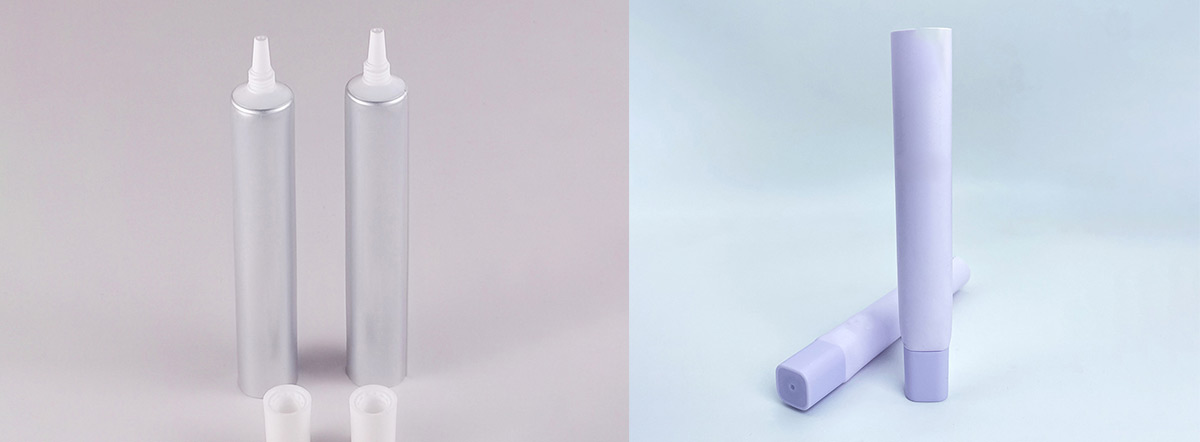
Manufacturers now rely on artificial intelligence and Industry 4.0 to achieve remarkable gains in lami tube manufacturing. A leading facility that adopted AI-driven automation reported a 30% increase in efficiency and near-zero defects in laminated tube production. The integration of artificial intelligence with lami tube making machine brings real-time monitoring, predictive maintenance, and data-driven decisions. The following table shows how advancements like automation, smart sensors, and IoT have improved operational speed and accuracy:
| Advancement Type | Impact on Operational Speed and Accuracy |
|---|---|
| Automation | Enhances efficiency and reduces manual errors |
| Smart Sensors | Facilitates real-time monitoring and predictive maintenance |
| IoT Integration | Enables data-driven decision-making, reducing downtime |
| Sealing Technologies | Improves product integrity and extends shelf life |
| Clean-in-Place Systems | Ensures compliance with hygiene and safety standards |
| Customization Capabilities | Allows production of a wider variety of tubes tailored to needs |
Artificial intelligence not only accelerates manufacturing but also ensures higher product quality and sustainability in every step of the process.
Key Takeaways
- Artificial intelligence boosts lami tube manufacturing efficiency by up to 30% and reduces defects to near-zero.
- Real-time data analytics help manufacturers identify bottlenecks, improve productivity, and extend equipment lifespan through predictive maintenance.
- AI-driven quality control systems ensure high standards by inspecting tubes for defects, reducing waste, and enhancing product consistency.
- Design automation allows for rapid customization of laminated tubes, enabling manufacturers to quickly respond to market demands.
- Machine learning optimizes inventory management, reducing stockouts by up to 65% and improving overall supply chain efficiency.
AI in Lami Tube Manufacturing
Smart Automation and Robotics
Industry 4.0 has transformed lami tube manufacturing by introducing smart automation and robotics. Facilities now use lami tube making machine powered by artificial intelligence and machine learning. These machines increase production efficiency and accuracy. They produce laminated tubes for cosmetics, pharmaceuticals, and food products. Modern automation systems allow for customization in tube sizes and designs.
Key components of these systems include unwinding and feeding systems, forming units, sealing systems, and cutting units. Each part works together to reduce waste and maintain consistent quality. AI-driven robotics handle repetitive tasks with high accuracy. Machine learning algorithms optimize machine settings in real time. This approach leads to fewer errors and higher throughput.
- AI-powered lami tube making machines enhance production efficiency and accuracy.
- These machines support a wide range of tube designs and sizes.
- Automation reduces manual intervention and improves accuracy.
- Robotics ensure precise handling and assembly of materials.
Smart automation and robotics have become essential for manufacturers who want to achieve high accuracy and efficiency in lami tube manufacturing.
Real-Time Data Analytics
Real-time data analytics play a crucial role in modern lami tube manufacturing. Machine learning models process data from sensors and machines throughout the production line. These models detect patterns and predict potential issues. Artificial intelligence systems monitor equipment performance and energy consumption.
Manufacturers use analytics to identify bottlenecks and inefficiencies. They can make informed decisions to improve throughput and accuracy. Real-time monitoring also helps prevent unplanned downtime. Machine learning algorithms schedule maintenance before failures occur. This proactive approach extends equipment lifespan and reduces costs.
| Benefit | Description |
|---|---|
| Reduced Downtime | Monitoring real-time data helps identify issues before failures occur, allowing for proactive maintenance and avoiding costly unplanned downtime. |
| Higher Productivity | Real-time analytics identify bottlenecks and inefficiencies, enabling manufacturers to make informed decisions to enhance throughput. |
| Reaching Energy Efficiency Goals | Analytics monitor energy consumption, helping to identify savings opportunities while reducing costs and carbon footprints. |
| Prolonged Equipment Lifespan | Tracking equipment utilization and condition allows for better maintenance scheduling, redistributing workloads, and preventing catastrophic failures, thus extending equipment life. |
| Reduced Costs | By enabling predictive maintenance and improving asset utilization, manufacturers can save significantly on costs associated with downtime and energy consumption. |
Machine learning and artificial intelligence work together to deliver these benefits. They help manufacturers reach energy efficiency goals and maintain high accuracy in every process step.
Quality Control with AI
Quality control has advanced with the adoption of artificial intelligence and machine learning in lami tube manufacturing. Automated vision systems use high-speed cameras and sensors to inspect every tube. These systems check for defects such as dents, uneven coloring, or incorrect dimensions. Machine learning algorithms analyze inspection data to predict potential defects.
AI-powered quality monitoring allows manufacturers to address issues before they escalate. This approach ensures that only tubes meeting strict standards reach the market. Automated systems provide consistent and objective inspections. They improve accuracy and reduce the risk of human error.
- Automated vision systems inspect tubes for defects with high accuracy.
- AI-powered quality monitoring predicts and prevents potential defects.
- Machine learning enhances the accuracy of inspections and reduces waste.
Manufacturers rely on artificial intelligence and machine learning to maintain product quality and accuracy. These technologies support continuous improvement and help companies meet customer expectations.
AI-Driven Design and Optimization
Design Automation in Laminated Tube Production
AI-driven design automation has changed how manufacturers create laminated tube products. Companies now use advanced machine learning models to automate the design process. These systems allow engineers to quickly adjust tube dimensions, wall thickness, and decorative features. The result is a faster response to customer needs and market trends.
- AI enhances quality control through advanced machine vision systems. These systems inspect laminated tubes in real time, reducing human error and increasing production throughput.
- Automation enables rapid customization of tube dimensions and designs. Manufacturers can meet diverse customer specifications with speed and accuracy.
- Robotic systems improve efficiency in tube filling and sealing. This leads to labor cost savings and better line efficiency.
- AI-driven data analytics predict maintenance needs and streamline inventory management. This ensures continuous operations with minimal downtime.
Design automation supports the creation of new laminated tube products with high accuracy. Machine learning algorithms analyze customer requirements and suggest optimal design parameters. This process reduces development time and improves the properties of each tube. Engineers can test different stacking sequences and fiber reinforced polymer combinations to achieve the best performance. The integration of design and optimization tools helps manufacturers deliver innovative laminated composites that meet strict industry standards.
Material Optimization with AI
Material optimization plays a key role in laminated tube manufacturing. Machine learning automates the screening process for materials. These algorithms simulate the properties and performance of various composites. Engineers use genetic algorithms and simulated annealing to select the best materials for each application. These techniques mimic natural selection and stress tests to find the most durable and cost-effective options.
- Machine learning automates material screening, simulating performance and identifying optimal options for laminated tubes.
- Genetic algorithms and simulated annealing help select materials by using natural selection processes and stress tests.
- Particle swarm optimization identifies ideal parameters for materials by simulating their behavior in different conditions.
- Machine learning analyzes material structures through generative models and reinforcement learning. This helps select materials based on strength, durability, and cost-effectiveness.
Material optimization ensures that each laminated tube meets the required properties for strength, flexibility, and barrier protection. Engineers can adjust the stacking sequence optimization of fiber reinforced polymer layers to enhance tube performance. The use of machine learning in material selection leads to better accuracy and consistency in laminated composites. Manufacturers can also reduce waste and lower production costs by choosing the right materials for each design.
Prototyping and Performance Enhancement
AI has transformed prototyping and performance testing in laminated tube development. Effective prototyping depends on material selection, design precision, and advanced fabrication techniques. By using machine learning and real-time data optimization, companies can speed up innovation cycles and bring high-quality laminated tubes to market faster.
- AI integration allows for real-time data optimization during prototyping.
- Automated design iterations enhance the prototyping process, improving accuracy and reducing errors.
- Predictive analytics identify production bottlenecks and suggest material optimizations for better performance.
- AI can reduce prototyping cycles by up to 40%, leading to significant time and cost savings.
Machine learning models evaluate the properties of laminated composites during each prototyping stage. Engineers use these insights to refine the stacking sequence optimization of fiber reinforced polymer layers. This approach ensures that each laminated tube achieves the desired performance and durability. Automated systems test the accuracy of tube dimensions, wall thickness, and barrier properties. The result is a more reliable and efficient prototyping process that supports continuous improvement in laminated tube design and optimization.
Tip: Companies that adopt AI-driven design and optimization tools can respond to market changes faster and deliver laminated tube products with superior properties and performance.
AI in Distribution and Supply Chain
Predictive Analytics for Inventory

Manufacturers use machine learning to improve inventory prediction in lami tube distribution. These models help companies avoid both stockouts and overstock situations. Teams set clear inventory planning goals, such as reducing stockouts or lowering holding costs. They select predictive analytics tools that work well with their warehouse management systems. Staff receive training to understand how machine learning models make predictions and how to use these insights for real decisions.
Companies using machine learning for inventory prediction see major benefits. AI-driven forecasting reduces supply chain errors by up to 50%. Retailers report up to a 30% drop in stockouts and a 20-50% reduction in inventory carrying costs. Amarra, for example, achieved a 40% reduction in overstock and improved the availability of high-demand laminated tube products. AI-powered inventory management has cut stockouts by up to 65% and increased sales.
| Evidence Type | Description |
|---|---|
| Reduction in Stockouts | AI-driven forecasting can reduce supply chain errors by up to 50%, enabling better inventory planning. |
| Reduction in Overstock | Retailers using AI have seen up to a 30% reduction in stockouts and a 20-50% reduction in inventory carrying costs. |
| Example of Implementation | Amarra achieved a 40% reduction in overstock while improving availability of high-demand items. |
| Overall Impact | AI-powered inventory management has reduced stockouts by up to 65% and increased sales. |
Route and Logistics Optimization
Machine learning also improves route and logistics optimization for lami tube distribution. Companies use prediction models to forecast delivery times and identify the best shipping routes. These models analyze traffic, weather, and order patterns. Machine learning helps companies adjust delivery schedules and reduce transportation costs.
Lami tube making machine manufacturers benefit from machine learning by predicting demand for spare parts and optimizing shipments. Distribution centers use prediction to balance workloads and avoid bottlenecks. Machine learning supports the prediction of mechanical properties for packaging, ensuring that laminated tube shipments arrive safely.
Note: Machine learning and AI increase efficiency in distribution by reducing delays and improving resource use.
Machine learning models make ten or more predictions at each stage, from inventory to delivery. These predictions help companies respond quickly to changes in demand and supply. The result is a more reliable and cost-effective supply chain for laminated tube products.
Business Impact and ROI
Industry Success Stories
Many industry leaders have transformed their laminated tube production by adopting artificial intelligence and machine learning. These companies use prediction models to improve accuracy and performance in every stage of manufacturing. They rely on predictive maintenance to forecast machine behavior and reduce downtime. Predictive quality helps them anticipate failures and achieve cost savings. Scrap reduction becomes possible by leveraging metrics to enhance product quality and minimize waste. Increasing yield and throughput is another benefit, as companies proactively manage processes to maintain specifications and reduce quality passes. Demand and inventory forecasting allows them to optimize inventory and reduce costs.
- Predictive maintenance reduces downtime and improves accuracy.
- Predictive quality minimizes failures and saves costs.
- Scrap reduction enhances product quality and reduces waste.
- Yield and throughput increase through proactive process management.
- Demand and inventory forecasting optimize inventory and lower costs.
A leading manufacturer integrated artificial intelligence into its lami tube making machine. The company saw a significant improvement in accuracy and performance. Machine learning models predicted maintenance needs and optimized production schedules. The result was higher yield and better product properties. Another company used prediction to improve the design of laminated composites. They achieved superior barrier properties and durability in their tubes.
Measuring ROI of AI Adoption
Companies measure the return on investment (ROI) of artificial intelligence in laminated tube manufacturing by tracking short-term and long-term gains. In the short term, they see reduced downtime, lower scrap rates, and improved accuracy. Long-term benefits include better design optimization, enhanced properties, and increased performance of laminated composites. Machine learning models provide prediction for maintenance, inventory, and production. These predictions help companies make data-driven decisions and improve accuracy.
| ROI Metric | Short-Term Impact | Long-Term Impact |
|---|---|---|
| Downtime Reduction | Immediate cost savings | Extended equipment lifespan |
| Scrap Rate | Lower waste and higher accuracy | Sustainable manufacturing |
| Yield/Throughput | Increased output | Consistent product performance |
| Inventory Optimization | Reduced holding costs | Improved supply chain efficiency |
| Product Properties | Enhanced tube accuracy | Superior laminated composites |
Companies that invest in artificial intelligence and machine learning for laminated tube production gain a competitive edge. They achieve better accuracy, improved design, and optimized performance. Prediction models support continuous improvement and help manufacturers deliver high-quality laminated tubes.
Implementation Steps
Getting Started with AI
Lami tube manufacturers can take several practical steps to begin their journey with artificial intelligence. The process starts with a clear understanding of the main challenges in laminated tube production. Companies often create a wish list of problems they want to solve, such as improving the properties of laminated composites or increasing the performance of their lami tube making machine.
- Identify the top challenges in laminated tube manufacturing, focusing on issues like prediction accuracy, machine learning integration, and optimization of composites.
- Assess the quality and relevance of available data. High-quality data supports better prediction and machine learning outcomes for laminated tube properties and performance.
- Develop a strategy that aligns with current infrastructure and organizational goals. This ensures that artificial intelligence and machine learning tools fit seamlessly into existing laminated tube production lines.
- Select platforms and software that can handle the data processing needs of laminated tube manufacturing. These tools should support prediction, optimization, and machine learning for composites and properties.
Tip: Early planning and a strong data foundation help companies maximize the benefits of artificial intelligence in laminated tube production.
Overcoming Challenges
Manufacturers face several obstacles when implementing artificial intelligence and machine learning in laminated tube production. Many companies encounter technological immaturity, especially when integrating new AI systems with legacy lami tube making machine equipment. A lack of specialized knowledge in machine learning and data analysis can slow progress. Uncertainty about the return on investment often causes hesitation, even though prediction models can improve performance and properties of laminated composites.
- Technological immaturity complicates integration with existing laminated tube systems.
- Many organizations lack skilled professionals in machine learning and artificial intelligence.
- Uncertainty about ROI delays investment in prediction and optimization technologies.
- Data maturity issues, such as incomplete or outdated information, reduce the effectiveness of machine learning for laminated tube properties.
- Transparency and trust in artificial intelligence outcomes remain concerns for stakeholders.
- Resistance from works councils and trade unions can arise due to fears about job impacts.
Manufacturers can address these barriers by focusing on data quality and reducing fragmentation, as 47% of companies report this as a major issue. Upskilling workers is essential, with 54% needing significant training in machine learning and artificial intelligence by 2025. Upgrading legacy systems also supports better prediction and optimization of laminated tube composites. Companies that embrace change can see productivity gains of 10% to 30% in laminated tube performance and properties. Clear communication about the benefits of artificial intelligence helps build trust and support for new technologies.
Conclusion

AI continues to reshape lami tube manufacturing and distribution. Companies see rapid advances in laminated tube production, driven by smart automation and prediction. The integration of lami tube making machine with adaptive control and machine learning enables dynamic design changes and reduces waste. Manufacturers benefit from:
- Enhanced precision and speed in laminated tube filling
- Smart sensors and vision systems that minimize errors
- Adaptive control for optimal throughput
- Prediction-based maintenance that reduces downtime
- Customization for diverse laminated tube designs
| Metric | Impact |
|---|---|
| Increase in efficiency | 30% |
| Increase in average selling price | 4% |
| Margin improvement | 1.8% |
Those interested in AI-driven design and prediction should start by evaluating current laminated tube processes and exploring automation platforms. Innovation remains essential for staying competitive in the laminated tube industry.
FAQ
What is a lami tube making machine?
A lami tube making machine produces laminated tubes used for packaging. These machines automate processes like forming, sealing, and cutting. Manufacturers use them to create tubes for cosmetics, pharmaceuticals, and food products.
How does artificial intelligence improve laminated tube quality?
Artificial intelligence uses sensors and vision systems to inspect each laminated tube. AI detects defects quickly and ensures only high-quality tubes reach customers. This technology reduces waste and increases consistency.
Can AI help reduce downtime in lami tube manufacturing?
Yes. AI predicts when a lami tube making machine needs maintenance. This prediction prevents unexpected breakdowns. Manufacturers save time and money by scheduling repairs before problems occur.
What role does AI play in supply chain management for laminated tubes?
AI analyzes sales data and predicts demand for laminated tubes. It helps companies manage inventory and optimize delivery routes. This leads to fewer stockouts and faster shipments.
Is it difficult to integrate AI with existing lami tube making machines?
Integration can present challenges. Many companies upgrade software and train staff to use AI tools. With the right support, manufacturers can connect AI systems to their lami tube making machines and improve production.